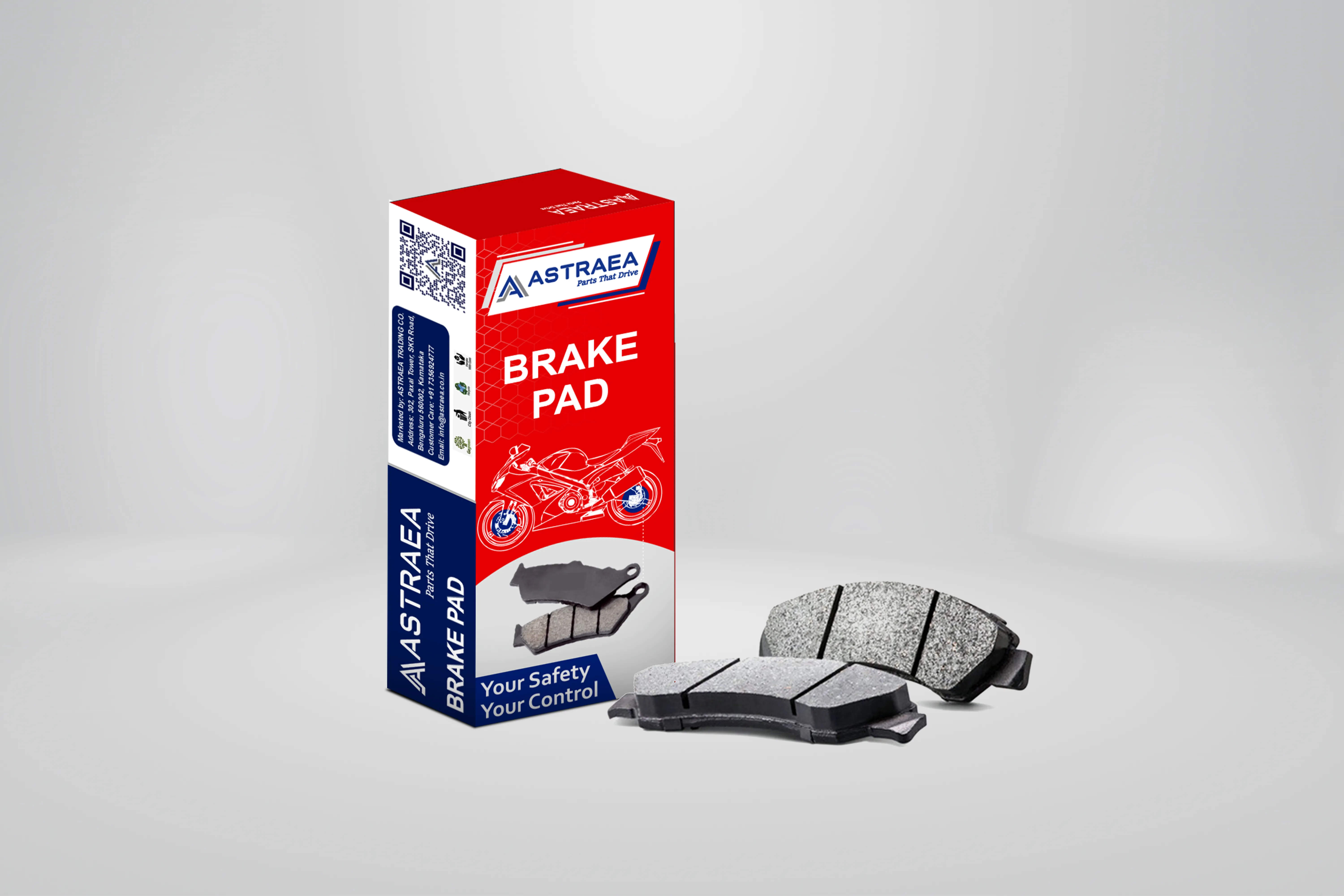
Is your motorcycle taking longer to stop than it used to? That small change is often the first hint that bike brake pad replacement is due. In this guide, “bike” means motorcycle. Brake pads are parts that wear down with every stop, and thin pads weaken your braking. Some noises and soft levers come from other faults, so the real pad thickness and your maker’s wear limit matter most. Below you will find seven warning signs, a quick checklist and advice on when to call a mechanic. Read it before your next ride, because strong brakes matter on busy Kerala roads and wet monsoon turns. Astraea supplies automotive spare parts including brake pads and brake shoes for applicable 2-wheeler and 3-wheeler requirements.
What Are Motorcycle Brake Pads and How Do They Work?
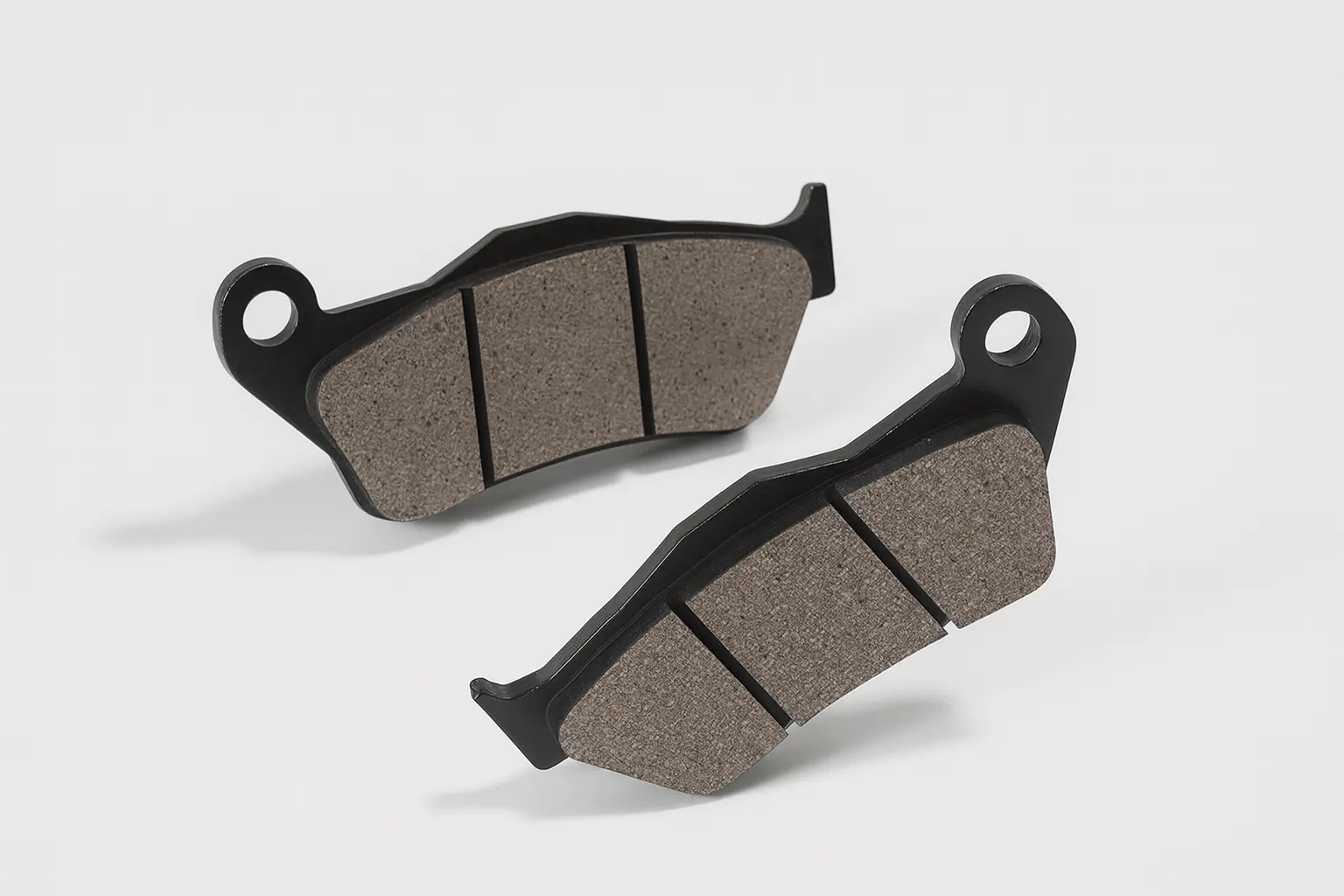
A brake pad is a small block of friction material that slows your motorcycle. When you pull the lever, fluid pressure pushes the brake caliper. The caliper squeezes the pads against the brake rotor, which is the spinning metal disc on your wheel. That rubbing turns your motion into heat and slows the bike. Each squeeze also rubs off a little pad material, so brake pad wear is slow but constant.
Lever → brake fluid → caliper → brake pads → rotor → friction → stop
What Causes Motorcycle Brake Pads to Wear Faster?
Brake pad wear speeds up with hard use. These habits and conditions add up:
- Stop-and-go city traffic
- Hard, late braking
- Heavy loads or a pillion rider
- Hilly, wet or muddy roads
- Soft pad material
- A caliper that sticks
Riders in Kerala often face heavy traffic, frequent stops and monsoon rain, so pads here may wear sooner.
Do All Motorcycle Brake Pads Wear at the Same Rate?
No. Front pads usually wear faster than rear pads, because the front brake does most of the stopping. A stuck caliper can also cause uneven brake pad wear, where one pad thins faster than the other.
How Long Do Motorcycle Brake Pads Last?
No single number fits every motorcycle. Brake pad wear depends on your riding style, road conditions and pad material. Pad thickness tells you more than kilometres do. Follow the inspection schedule in your owner’s manual. Replace the pads when they reach the wear limit or get damaged.
7 Signs Your Motorcycle Needs New Brake Pads
These motorcycle brake pad signs help you catch trouble early. Some worn brake pad symptoms also point to other parts, so each sign lists what else may be wrong. Use them to decide on bike brake pad replacement.
1. Squealing or Grinding Noise When Braking
A high squeal can mean thin pads, but dust or pad material can cause it too. Grinding is more serious, because metal may be touching the rotor. Get the pads, rotor and caliper checked soon.
2. Reduced Braking Power
You squeeze harder, yet the bike slows less. Worn or oily pads can cause this. Old brake fluid or a hydraulic fault can too, so check the whole brake system, not just the pads.
3. Increased Stopping Distance
Worn pads can lengthen the distance you need to stop. Tyres, wet roads, speed and rider input also play a part. Treat this as a safety warning and get an inspection straight away.
4. Brake Lever or Pedal Feels Different
A soft or spongy lever usually points to air or fluid trouble, not worn pads. A brake line or master cylinder fault can also cause it. Ask a technician to check the hydraulic system.
5. Motorcycle Pulls to One Side When Braking
Pulling means one side grips more than the other. Uneven pad wear, a sticking caliper or rotor trouble can cause it. Find the cause first, then replace pads if needed.
6. Excessive Brake Vibration or Pulsation
Shaking in the handlebar or a pulsing lever often points to the rotor. Uneven pad deposits or caliper faults can do it too. Vibration alone does not prove worn pads, so inspect pads, rotor and caliper together.
7. Brake Pads Look Thin or Have Reached the Wear Limit
This is the clearest sign. Look at the friction material and compare it with the minimum thickness in your service manual. Some pads have a wear indicator, a small groove or mark that shows when to replace them. Judge by what you see, not by kilometres.
Before replacing a part, make sure you have identified the correct vehicle application and part. You can explore Astraea’s automotive spare parts range for applicable brake components.
Are These Symptoms Always Caused by Worn Brake Pads?
No. The same worn brake pad symptoms can come from other parts. This table shows what else to check.
| Symptom | Possible causes | What to do |
|---|---|---|
| Squealing | Pad material, dirt, vibration, wear | Inspect |
| Grinding | Severe pad wear, metal touching rotor | Inspect now |
| Weak braking | Pads, brake system or hydraulic fault | Check whole system |
| Vibration | Rotor, pad deposits, caliper | Inspect |
| Soft lever | Air or fluid problem | Check brake system |
| Pulling | Uneven wear, caliper or rotor issue | Inspect |
| Longer stopping | Brakes, tyres, road, rider | Investigate now |
Brake Pads vs Brake Rotors: What's the Difference?
Three parts work as a team, and each one does a different job:
- Brake pad: the friction block that wears out.
- Brake rotor (disc): the spinning surface the pads clamp against.
- Brake caliper: the part that presses the pads onto the rotor.
Check all three when you notice grinding, vibration, scoring, uneven wear or odd braking. A worn pad can scratch the rotor, and a sticky caliper can wear a pad badly. When replacing a safety-critical component, correct fitment matters. Astraea’s OEM vs aftermarket automotive parts guide explains why vehicle model, variant, fitment and supplier reliability matter when choosing replacement parts.
Can Contaminated Brake Pads Cause Braking Problems?
Yes. Oil, grease or brake fluid on the pads cuts friction. You may feel weak braking or hear noise. Depending on the damage and your maker’s advice, you may need new pads. Get them checked before you ride on.
Do Worn Brake Pads Affect ABS?
ABS does not stop pads from wearing. Pads and ABS are separate parts of the braking system. An ABS warning light does not mean the pads are worn, because a sensor fault can trigger it. Still check your pads on schedule.
When Should You Replace Motorcycle Brake Pads?
Inspect or replace the pads soon when you see any of these motorcycle brake pad signs:
- Thickness has reached the maker’s minimum
- The wear indicator shows
- Friction material looks very thin
- You hear grinding
- Pads are damaged or contaminated
- Wear is uneven
- Braking feels different
Do not go by kilometres alone. Follow this order: maker’s specification, actual pad condition, full brake check, then a qualified technician if you are unsure. Bike brake pad replacement should follow your manual, not guesswork.
Can You Replace Motorcycle Brake Pads Yourself?
Some riders can, but it is a safety job. Riding on worn pads is not safe, and a wrong fit can be worse. If you try bike brake pad replacement at home, do this:
- Follow the service manual
- Fit the retaining hardware correctly
- Inspect the caliper and rotor
- Test the brakes before you ride
If you lack the tools or the experience, hand the job to a qualified technician.
What Should You Do After Replacing Brake Pads?
New pads need a little care. Bedding in means gentle, planned braking that lets new pads settle against the rotor.
- Check the lever and pedal feel.
- Look at the rotor condition.
- Follow the maker’s bedding-in steps.
- Avoid hard braking during bedding.
- Test the brakes at low speed before normal riding.
If you are also reviewing other motorcycle maintenance products, explore Astraea’s automotive products for applicable lubricants and replacement parts.
How to Extend Motorcycle Brake Pad Life
Small habits protect your pads and your wallet. Spotting motorcycle brake pad signs early helps too.
- Brake early and smoothly
- Keep a safe gap from the vehicle ahead
- Stay within your load limit
- Keep tyres in good shape
- Change brake fluid on time
- Fix odd noises quickly
- Follow your motorcycle brake maintenance schedule
Brake maintenance is only one part of overall motorcycle care. Follow the manufacturer’s maintenance schedule, keep the braking system clean and address unusual noises or changes in braking feel early.
For other routine two-wheeler maintenance products, see Astraea’s guide to fork oil, chain lube and grease.
Motorcycle brake maintenance is one part of a wider maintenance routine. Engine oil should also be selected according to the motorcycle manufacturer’s recommended viscosity and specification. Astraea’s motorcycle engine oil guide explains the basic selection process. If you are checking your engine-oil requirement, you can also use Astraea’s Oil Finder.
Quick Motorcycle Brake Pad Inspection Checklist
Use this table for a fast check before a ride.
| Check | What to look for | Action |
|---|---|---|
| Pad thickness | Enough friction material | Compare with specification |
| Wear indicator | Wear limit reached | Replace |
| Pad surface | Damage or contamination | Inspect |
| Rotor | Scoring or damage | Inspect |
| Caliper | Uneven or sticking movement | Inspect |
| Brake lever | Abnormal feel | Check system |
| Brake pedal | Abnormal response | Check system |
| Braking performance | Weaker than normal | Inspect now |
When Should You Get Professional Brake Service?
Some brake problems need a trained eye. Book a check if you notice any of these:
- Grinding
- Braking that feels worse
- Pads at the wear limit or worn unevenly
- Rotor damage
- Signs of a brake fluid or hydraulic fault
- Doubt about the cause
- No tools or experience for brake work
If you are unsure about the correct replacement part or need help identifying the relevant product category, contact Astraea for assistance. You can also explore Astraea’s automotive spare parts range for applicable brake components.
Final Thoughts
Your brakes usually warn you before they fail. A squeal, a soft lever, a longer stop or a thin pad is your bike asking for help. Watch for the seven signs above, then check the pads, rotor and caliper together. Remember that worn brake pad symptoms can have other causes, so do not guess. Your manual and a qualified technician give the safest answer. If you are unsure, get your bike checked today. Bike brake pad replacement costs far less than a crash, and a calm, confident ride is worth it.
Common questions
Frequently Asked Questions
How often should motorcycle brake pads be replaced?
When they reach the wear limit in your manual or get damaged. Inspect them on the maker’s schedule.
What are the most common worn brake pad symptoms?
Squealing, grinding, weak braking, longer stopping, pulling, vibration and thin pads.
How thick should motorcycle brake pads be?
It depends on the model. Check the minimum thickness in your service manual.
Can I ride with worn brake pads?
No. Worn pads cut braking power and can damage the rotor. Get them checked first.
Do front and rear brake pads wear at the same rate?
No. Front pads usually wear faster.
Can worn brake pads damage the brake rotor?
Yes. Pads worn down to metal can scratch the rotor.
What causes motorcycle brake pads to wear quickly?
Hard braking, heavy traffic, heavy loads, soft pads and a sticking caliper.
Can brake pads wear unevenly?
Yes. A sticking caliper is one common cause.
Can I replace only one brake pad?
No. Replace both pads in a caliper together, as your maker advises.
Do new brake pads need bedding in?
Yes. Follow the maker’s bedding-in steps.
What happens if I don't replace worn brake pads?
Braking weakens, the rotor can get damaged, repairs cost more and stopping becomes unsafe.