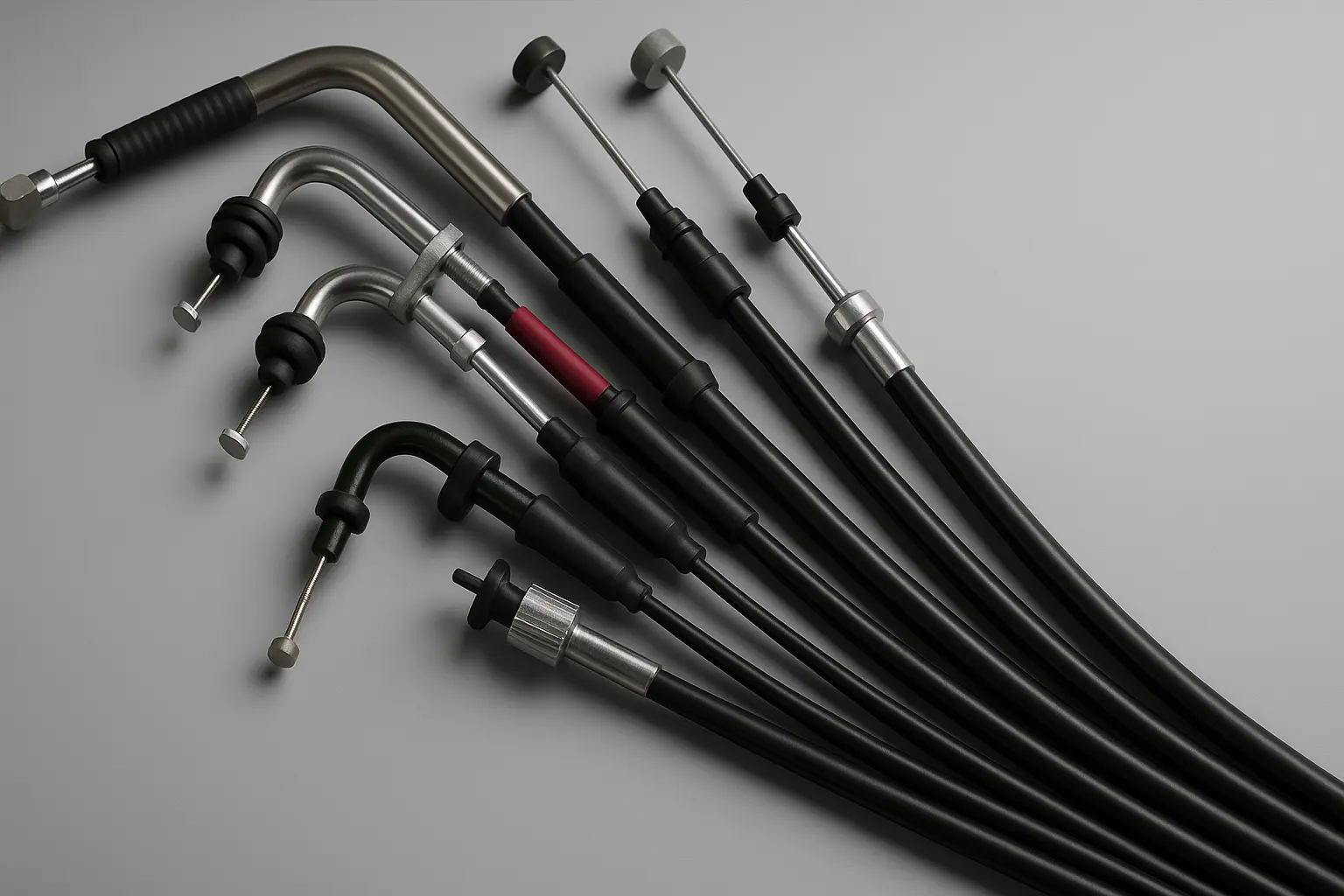
Control cables are critical components that directly affect your vehicle's performance and safety. Regular inspection and timely replacement can prevent dangerous situations and ensure smooth operation.
Warning Signs of Worn Cables
Watch out for these indicators that your cables need replacement:
Fraying or Visible Damage
Any visible damage to the cable housing is a critical safety issue requiring immediate replacement
Stiff or Sticky Operation
Difficulty pulling the lever indicates internal cable wear or lack of lubrication
Inconsistent Response
Delayed or unpredictable action suggests cable stretching or internal damage
Inspection Checklist
Perform these checks every 3 months or 3,000 km:
- ✓Visually inspect the entire cable length for damage, fraying, or kinks
- ✓Check cable tension and adjust according to manufacturer specifications
- ✓Test for smooth operation without binding or sticking points
- ✓Inspect cable ends and fittings for wear, rust, or looseness
- ✓Look for signs of water ingress or contamination in the cable housing
Extending Cable Life
Follow these maintenance tips to maximize cable lifespan:
Regular Lubrication
Lubricate cables every 1,000 km with appropriate cable lubricant to prevent internal wear
Keep Clean
Keep cables clean and free from dirt and debris that can cause premature wear
Proper Routing
Avoid sharp bends or kinks in the cable routing that can cause internal damage
Dry Storage
Store your vehicle in a dry place to prevent rust and corrosion
Pro Tip: Replace cables in pairs (throttle and clutch together) for consistent performance and to avoid mismatched feel.
When to Replace
Don't wait for complete failure. Replace cables at the first sign of significant wear or after 2-3 years of regular use, even if they appear functional. The cost of replacement is minimal compared to the safety risk of cable failure.
Always use high-quality replacement cables that meet or exceed OEM specifications. Cheap cables may save money initially but often fail prematurely and can compromise safety.


