Maintaining the smooth operation of your motorcycle's engine depends on selecting the proper engine oil. However, when you see grades such as 10W-30, 10W-40, 15W-50 and 20W-50 on oil containers, it can be difficult to understand what they mean and which one your bike needs.
These numbers represent the oil's viscosity, which describes its resistance to flow at different temperatures. Understanding motorcycle engine oil grades makes it easier to compare lubricants and choose one that meets your vehicle manufacturer's requirements.
What Do Engine Oil Grades Mean?
Engine oil grades follow the SAE (Society of Automotive Engineers) viscosity classification system. A grade such as 10W-40 contains two numbers that explain how the oil performs under different temperature conditions.
- The first number (10W): Indicates the oil's cold-temperature performance. The W stands for Winter. A lower number means the oil meets more demanding cold-temperature viscosity requirements, helping it circulate more easily during cold starts.
- The second number (40): Indicates the oil's high-temperature viscosity grade. A higher number represents a higher viscosity range at operating temperatures.
For example, 10W-30 and 10W-40 have the same winter rating, but 10W-40 has a higher viscosity grade at operating temperatures.
It is important to understand that these numbers describe viscosity, not the overall quality or performance of the engine oil. The right choice also depends on the engine design and the lubricant specifications recommended by the manufacturer.
10W-30 vs 10W-40: What Is the Difference?
Both 10W-30 and 10W-40 have the same 10W winter rating, but they differ in their high-temperature viscosity.
10W-30 engine oil has a lower operating-temperature viscosity grade. It is suitable for motorcycles whose manufacturers recommend this grade. When used in the correct application, it can support efficient engine operation and proper lubrication.
10W-40 engine oil has a higher operating-temperature viscosity grade. It is specified for motorcycle engines designed to operate with this viscosity range.
So, which is better: 10W-30 or 10W-40?
Neither is automatically better. The right choice depends on your motorcycle's engine design, recommended viscosity and required performance specifications. Using a different grade without checking the owner's manual may affect oil circulation and engine performance.
What Is 15W-50 Engine Oil Used For?
15W-50 engine oil has a 15W winter rating and a 50 high-temperature viscosity grade.
Compared with 10W-40, it has a less demanding cold-temperature viscosity classification and a higher operating-temperature viscosity grade.
This grade is used in motorcycles whose manufacturers specifically recommend 15W-50 for their engines and operating requirements.
A higher 50 rating does not automatically make it a better choice for hot weather or demanding riding conditions. Engine design and manufacturer recommendations matter more than choosing a thicker oil based on temperature alone.
When Should You Use 20W-50 Bike Engine Oil?
20W-50 bike engine oil is a multigrade lubricant with a 20W winter rating and a 50 high-temperature viscosity grade.
It is specified for certain motorcycle engines designed to use this viscosity range. However, it should not automatically be considered the best option for older bikes or motorcycles operating in hot climates.
Compared with 10W-30, 20W-50 has a less demanding cold-temperature classification and a higher operating-temperature viscosity grade. Using oil that is thicker than recommended may affect how easily it circulates through the engine, particularly during starting conditions.
Always check your motorcycle's owner's manual before choosing 20W-50 instead of another viscosity grade.
10W-30 vs 10W-40 vs 15W-50 vs 20W-50: Quick Comparison
Understanding the differences between these engine oil grades becomes easier when you compare their viscosity classifications.
| Engine oil grade | Winter rating | High-temperature grade |
|---|---|---|
| 10W-30 | 10W | 30 |
| 10W-40 | 10W | 40 |
| 15W-50 | 15W | 50 |
| 20W-50 | 20W | 50 |
The first number indicates cold-temperature performance, while the second represents the high-temperature viscosity grade.
Although these grades have different viscosity characteristics, they are not interchangeable. Always follow the viscosity recommendations provided by your motorcycle manufacturer.
How to Choose the Right Engine Oil for Your Bike
Choosing motorcycle engine oil involves more than comparing viscosity grades. Before purchasing a lubricant, consider these important factors.
1. Check the Owner's Manual
Start with the recommended SAE viscosity grade. Manufacturers may specify different grades depending on the engine design and operating conditions.
2. Verify the API Classification
API (American Petroleum Institute) categories indicate engine oil performance requirements. Check whether the oil meets the performance classification recommended for your motorcycle.
3. Check the JASO Specification
For four-stroke motorcycles with wet clutches, JASO specifications such as MA or MA2 are important. They indicate friction performance requirements that help ensure compatibility with wet-clutch systems. Always follow the manufacturer's recommendation.
4. Consider Your Riding Conditions
Daily commuting, long-distance travel and ambient temperatures can influence engine oil selection. However, stay within the viscosity grades approved by your motorcycle manufacturer.
5. Choose Oil Made for Your Vehicle
Motorcycles, scooters and three-wheeler engines may have different lubrication requirements. Make sure the lubricant is designed for your vehicle type and meets its required specifications.
Explore Astraea's Motorcycle Engine Oil Range
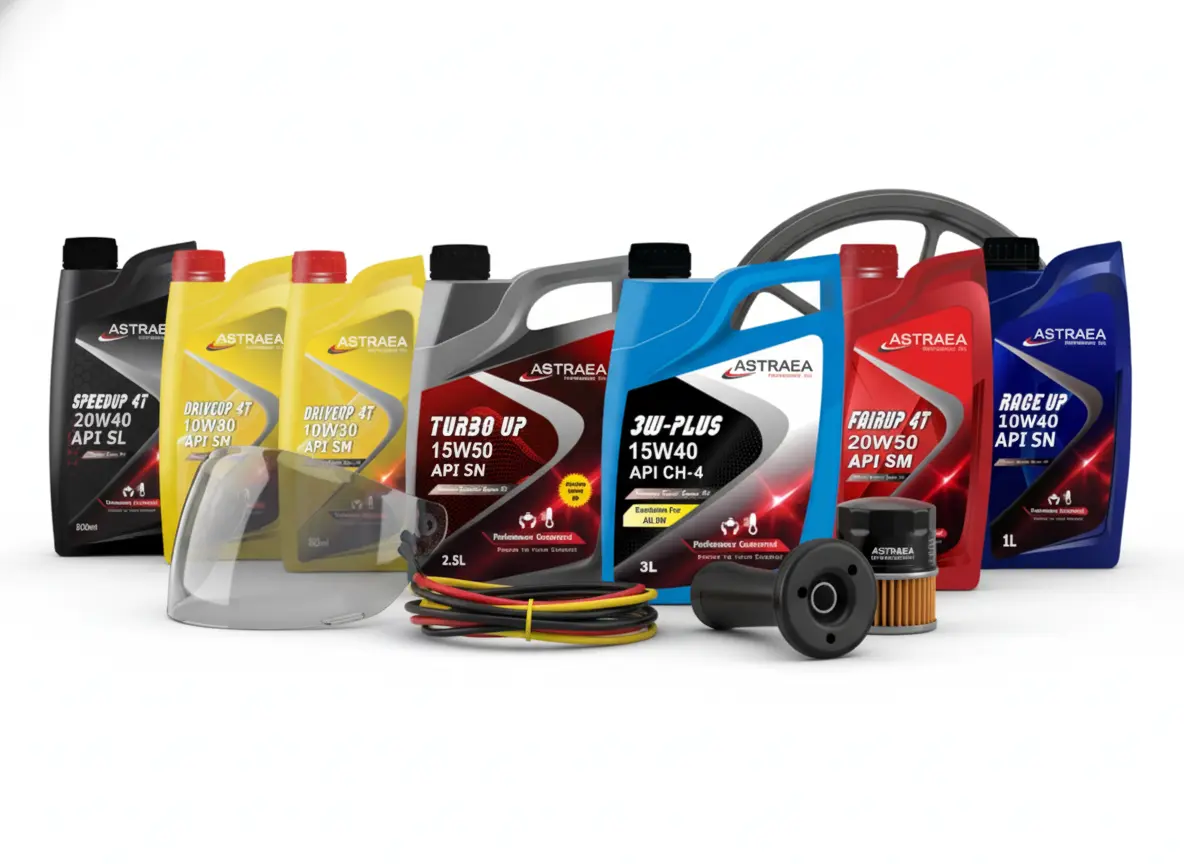
Once you understand the differences between engine oil grades, choosing a suitable lubricant becomes easier. Astraea offers a range of four-stroke motorcycle engine oils in different viscosity grades.
Some available options include:
| Astraea engine oil | SAE viscosity grade | API classification |
|---|---|---|
| EASEUP 4T | 10W-30 | SN |
| SCROUP 4T | 10W-30 | SL |
| DRIVEUP 4T | 10W-30 | SM |
| RACEUP 4T | 10W-40 | SN |
| TURBOUP 4T | 15W-50 | SN |
| FAIRUP 4T | 20W-50 | SM |
Each product has its own specifications and intended application. The viscosity grade and API classification are important starting points, but you should also check the product's technical information and your motorcycle's requirements before purchasing.
Explore the Astraea motorcycle engine oil range to compare available lubricants and find an option that matches your vehicle's requirements.
Common questions
Frequently Asked Questions
1. Is 10W-40 Better Than 10W-30 for Bikes?
Not necessarily. 10W-40 has a higher operating-temperature viscosity grade, but the correct choice depends on your motorcycle manufacturer's recommendation and engine requirements.
2. Can I Use 20W-50 Oil Instead of 10W-30?
Only if your motorcycle manufacturer permits 20W-50. These grades have different viscosity characteristics and should not be treated as interchangeable.
3. What Does the W Mean in Engine Oil Grades?
The W stands for Winter. It indicates the oil's cold-temperature viscosity classification under the SAE system.
4. Does Thicker Engine Oil Provide Better Protection?
Not always. Engine oil needs the correct viscosity to circulate properly and protect engine components. Using an unsuitable thicker oil may affect lubrication and engine performance.
5. How Often Should I Change My Motorcycle Engine Oil?
Oil change intervals vary depending on the motorcycle model, oil specification and riding conditions. Follow the service schedule provided in your owner's manual.
6. Can I Change My Motorcycle's Engine Oil Viscosity?
You should only change the viscosity grade if your motorcycle manufacturer permits the alternative grade. Check the owner's manual and ensure the replacement oil also meets the required performance specifications.
Final Thoughts
Understanding engine oil grades makes it easier to compare lubricants and choose the right option for your motorcycle. Whether you are considering 10W-30, 10W-40, 15W-50 or 20W-50, no single viscosity grade is suitable for every bike.
Always prioritise your manufacturer's recommended viscosity, API classification and JASO requirements when selecting motorcycle engine oil.
Explore Astraea's engine oil range to find available lubricant options for your vehicle.